Table of Content
Introduction
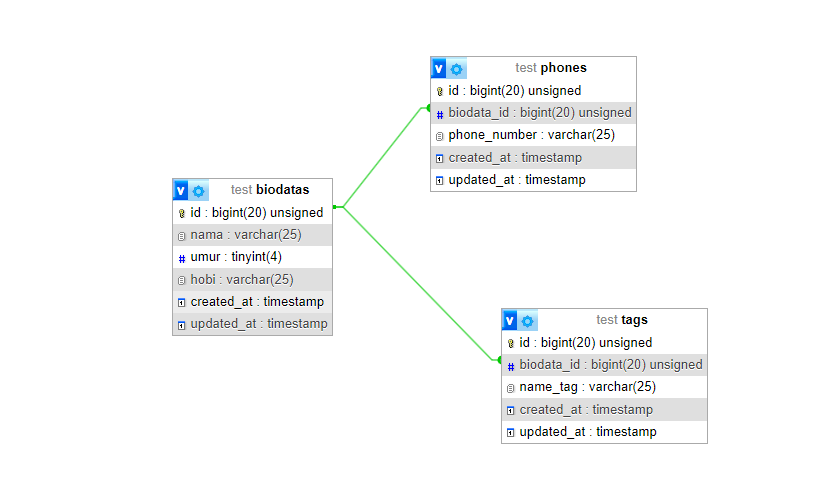
Eloquent Relationship merupakan method yg didefinisikan di dalam model dan digunakan untuk menghubungkan antar tabel yg saling berhubungan. Ini adalah cara efektif untuk melakukan relasi database tanpa join inner join(). Kali ini saya akan membuat case sederhana, terdapat biodata yg memiliki relasi one to one dan one to many
Migration
Pertama tama buat migration berikut
- biodata
- tags
- phone
migration biodatas
public function up(): void
{
	Schema::create('biodatas', function (Blueprint $table) {
		$table->id();
		$table->string('nama', 25);
		$table->tinyInteger('umur');
		$table->string('hobi', 25);
		$table->timestamps();
	});
}
migration tags
public function up(): void
{
	Schema::create('tags', function (Blueprint $table) {
		$table->id();
		$table->unsignedBigInteger('biodata_id');
		$table->string('name_tag', 25);
		$table->timestamps();
		$table->foreign('biodata_id')->references('id')->on('biodatas')->onDelete('cascade');
	});
}
Note : perhatikan unsignedBigInteger()
migration phones
public function up(): void
{
	Schema::create('phones', function (Blueprint $table) {
		$table->id();
		$table->unsignedBigInteger('biodata_id');
		$table->string('phone_number', 25);
		$table->timestamps();

		// Foreign Key
		$table->foreign('biodata_id')->references('id')->on('biodatas')->onDelete('cascade');
	});
}
Model
Model Biodata
class Biodata extends Model
{
    use HasFactory;
    protected $guarded = [];

    public function phone()
    {
        return $this->hasOne(Phone::class);
    }

    public function tag()
    {
        return $this->hasMany(Tag::class);
    }
}
Table biodatas melakukan relasi one to one ke table phones dan one to many ke table tags.
Model Tag
class Tag extends Model
{
    use HasFactory;

    public function biodata()
    {
        return $this->belongsTo(Biodata::class);
    }
}
Model Phone
class Phone extends Model
{
    use HasFactory;

    public function biodata()
    {
        return $this->belongsTo(Biodata::class);
    }
}
Selanjutnya buat beberapa data di table biodatas, phones, dan tags.
Controller
Controller Biodata
public function index()
{
	return view('pages.biodata.index',[
		'biodatas' => Biodata::latest()->get()
	]);
}

public function show($id)
{
	$biodata = Biodata::where('id',$id)->first();
	return view('pages.biodata.show', compact('biodata'));
}
Note: tidak semua function bisa menggunakan relationship. latest()->get() dapat melakukannya!
Views
index.html
@foreach($biodatas as $bio)
<tr>
  <td>{{ $bio->nama }}</td>
  <td>{{ $bio->phone->phone_number }}</td>
  <td>{{ $bio->umur }}</td>
  <td>{{ $bio->hobi }}</td>
  <td>
	<a href="{{ route('biodata.show', $bio->id) }}" class="btn btn-sm btn-primary">Show</a>
  </td>
</tr>
@endforeach
Untuk memanggil nya kita cukup looping $var->nama_method->field
show.html
<p>{{ $biodata->nama }}</p>
<p>{{ $biodata->umur }}</p>
<p>{{ $biodata->hobi }}</p>
@foreach ($biodata->tag()->get() as $item)
<ul>
    <li>{{ $item->name_tag }}</li>
</ul>
@endforeach
Untuk memanggil one to many, kita harus looping terlebih dahulu. $var->nama_method()->get() . Kesimpulan nya adalah dengan menggunakan Eloquent Relationship, kita dapat koding secara efisien tanpa melakukan join inner. Jika menggunakan join inner, lalu ada field yg harus kita ubah. Akan cukup sulit dan yg jelas proses maintenance akan lebih buruk.